


 Search



18.06.2026
Meet Dougie Mac Dramatherapist, Andrew…
“I’m not a regular therapist; I’m a cool therapist”. With his painted nails, nose ring and dyed hair, Dougie Mac Dramatherapist Andrew Robinson can regularly be heard singing Sabrina Carpenter songs in the corridors of our Children’s Services.
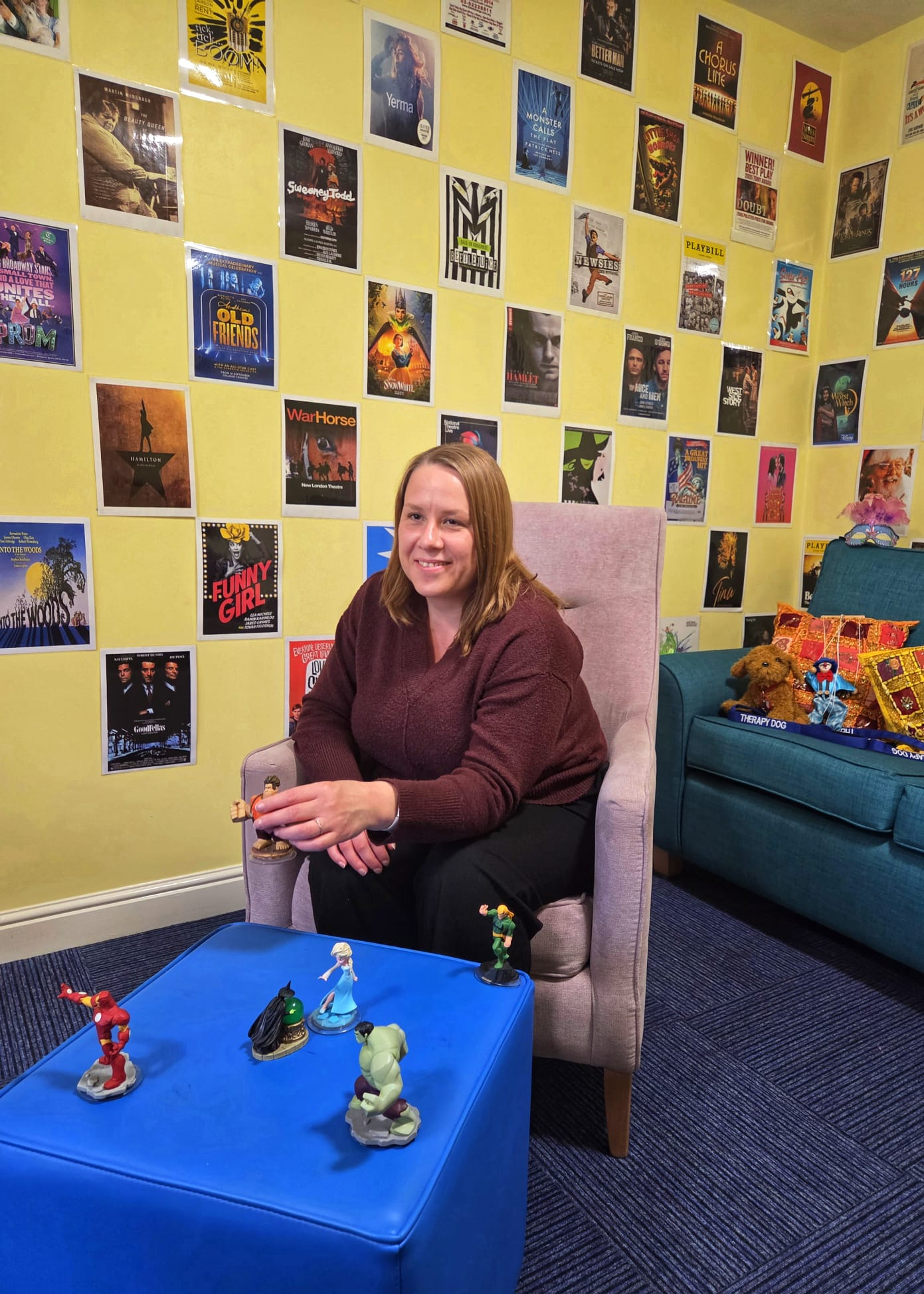
A larger-than-life and well-loved character among colleagues and children and their families at Dougie Mac, Andrew specialises in one-to-one therapy using dramatherapy – a unique form of psychotherapy which uses aspects of theatre and performance all underpinned with psychotherapy theory.
Rather than come into a therapy room and feel obligated to talk about problems or worries, Andrew uses stories, film, narrative, arts and crafts, play, costume and puppetry to allow clients to open up and talk about their emotions.
He said: “I am very conscious of the impact one person can have on other people – it’s important. Every morning when I come into work, I make everyone a drink and at the end of the day I make sure I wash their cups up. I like to make people smile and give them a good day – it’s nice to make people smile.”
Andrew has worked with our Children’s Services for four years, having previously worked with adults in a secure psychiatric unit and children removed from mainstream education, so he is able to adapt his therapy to the needs of each individual he works with– whether that’s a child or young adult receiving our care, or a sibling or parent of an ill or deceased child.
“I have the ability to adapt to different clients.,” says Andrew. “If I have a dad in, then I’m not going to be singing Sabrina Carpenter, belting out Tina Turner or talking about musicals, but I may well talk about football or something of interest to them instead. Dramatherapy relies heavily on metaphor and that metaphor is different for every individual.
“Everyone is different, so the therapy adapts to the client. When I talk to siblings, I try to focus on their brother or sister’s diagnosis and find out what it means having a sibling with a serious condition or a brother or sister who has died and how it impacts on their life. It’s about having that space to be able to say exactly how you feel.
“Sometimes people may have a thought that they think they shouldn’t have but once they express it out loud, then we are able to work with it. In therapy, if something is shared, then I can do my best to help. I always make sure I don’t use clinical language with my clients as I want people to feel comfortable and understand what I am talking about – but there is always psychological theory underpinning what I’m doing.
“Where dramatherapy comes into its own is that it is not always about the diagnosis of the individual. For example, a teenager with a life-limiting illness who has therapy with me has the same problems as other teenagers outside of Children’s Services. They have the fears and worries that all teenagers do. Talking to me gives them that space to express themselves and identify who they are.
“The therapy is very spontaneous and is completely led by the individual who may feel like they’re working with one thing, but actually things can be in the subconscious and they can then become paramount to the therapeutic process.
“I love my job and Dougie Mac is a wonderful place to work. It’s great to be able to support people during a time that can be extremely dark and emotionally draining, so to have someone trust you with their emotions and truth is a very, very privileged role and it’s a real privilege to work here.”
One young person who has benefitted from the dramatherapy sessions is 14-year-old Zak who lost his older brother, Max, to cancer.
He said: “At first, I wasn’t sure what to expect, but it turned out to be something that really helped me. I built a strong bond with my therapist, Andy, very quickly. He was friendly, easy to get along with, and made me feel comfortable from the start. What I think made the biggest difference is how he adapted to match me and my personality. It never felt forced or awkward—he just understood how to work with me.
“Through dramatherapy, I found a way to express myself without even realising I was doing it. It actually became easier to talk about losing Max because sometimes I didn’t even know I was talking about him – it just came out naturally through the activities. That made a big difference for me.
“It’s also the reason I got involved in the school show and why I’ve chosen to take drama for my GCSEs. It gave me confidence and helped me find something I enjoy and feel good about.
“Dramatherapy has helped me more than I expected, and I’m really grateful for the support I received.”
Pictured – Helena Harrison; Family Liaison Nurse
